Superverse: From DEX Fees to SUPER Buybacks
Superverse is a Web3 gaming network whose first liquidity protocol, BlackHole, is a decentralized exchange built on Avalanche. BlackHole’s documented mechanism directs 10% of protocol fees to SUPER buybacks through smart contracts.
- Buyback funding
- 10% of BlackHole protocol fees.
- Purchased token
- SUPER.
- Exchange network
- Avalanche.
- Execution mechanism
- Smart contracts direct the fee allocation programmatically.
Fee allocation and token purchases
BlackHole protocol fees provide the funding for SUPER purchases. The 10% figure specifies the share allocated from those fees; it does not describe the fee charged on an individual trade.
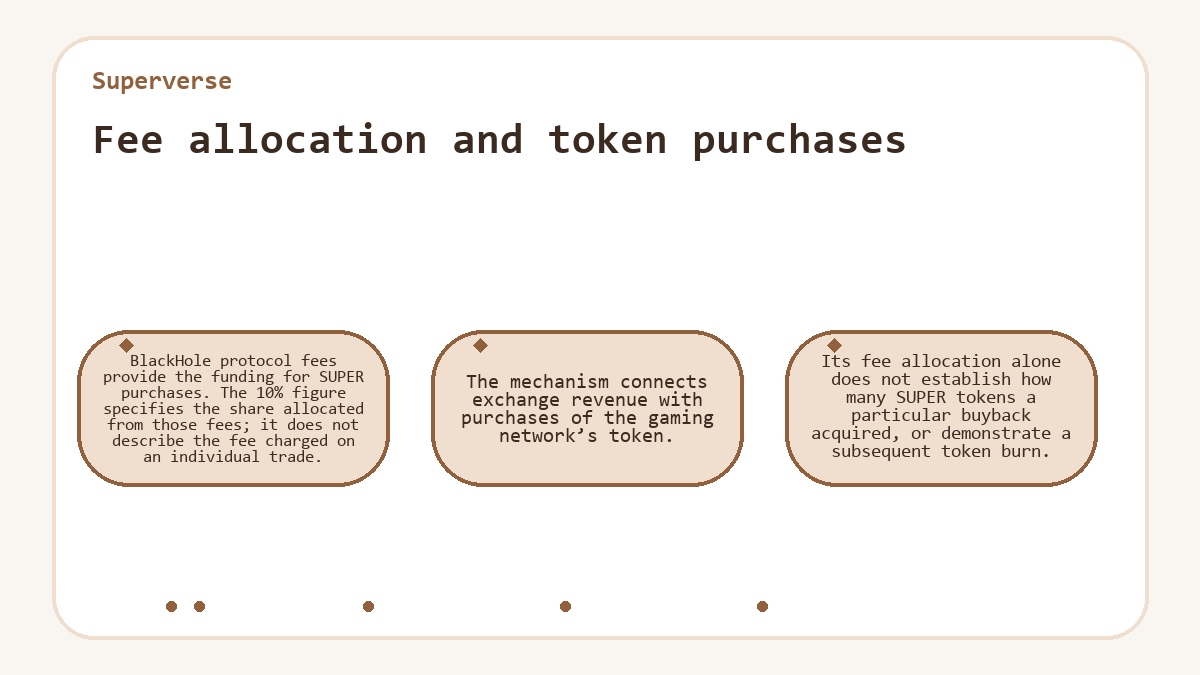
The mechanism connects exchange revenue with purchases of the gaming network’s token. Its fee allocation alone does not establish how many SUPER tokens a particular buyback acquired, or demonstrate a subsequent token burn.
First-month metrics and the fee base
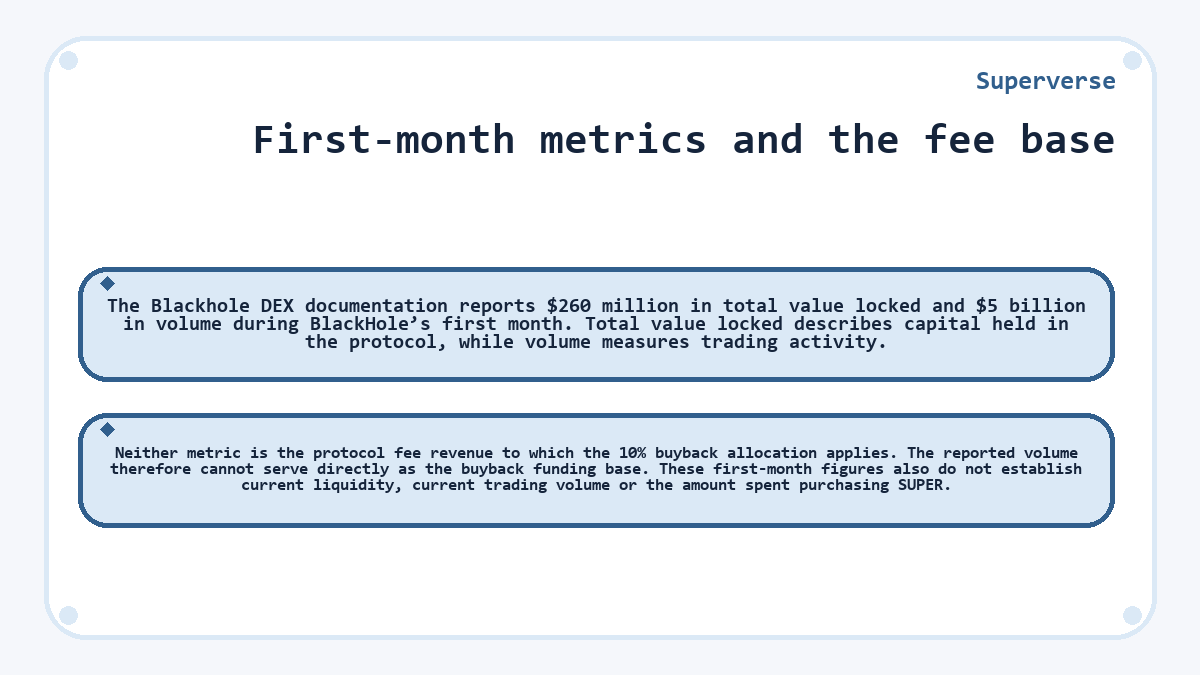
The Blackhole DEX documentation reports $260 million in total value locked and $5 billion in volume during BlackHole’s first month. Total value locked describes capital held in the protocol, while volume measures trading activity.
Neither metric is the protocol fee revenue to which the 10% buyback allocation applies. The reported volume therefore cannot serve directly as the buyback funding base. These first-month figures also do not establish current liquidity, current trading volume or the amount spent purchasing SUPER.
Governance and reward access
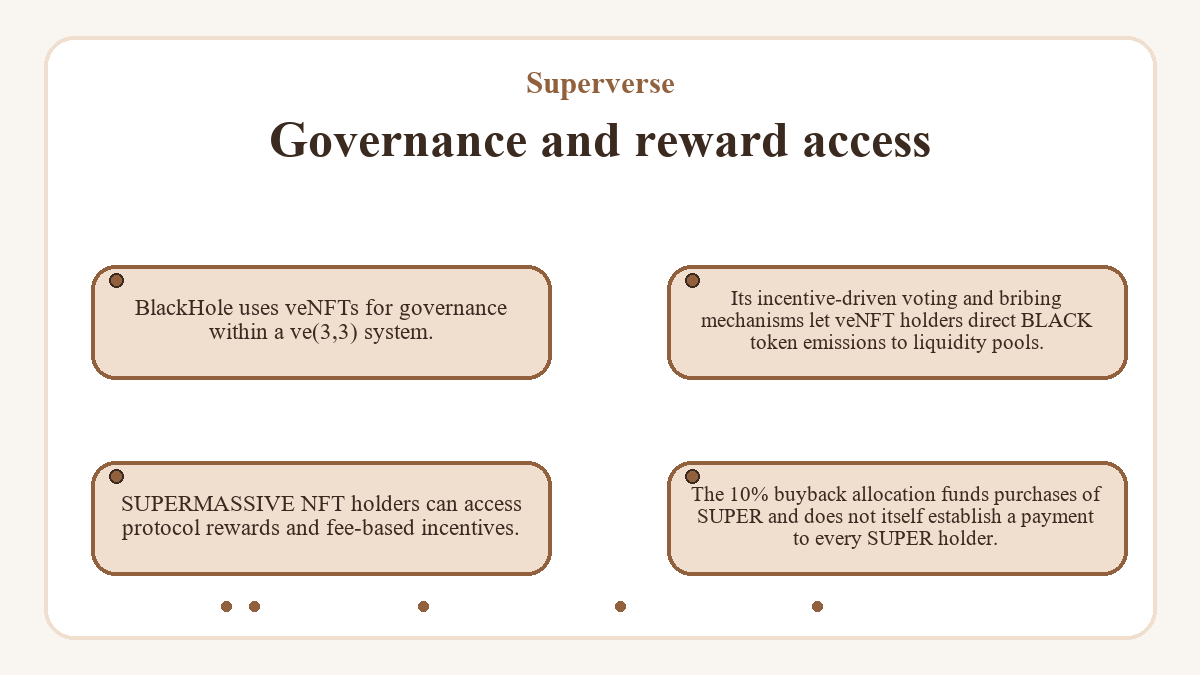
BlackHole uses veNFTs for governance within a ve(3,3) system. Its incentive-driven voting and bribing mechanisms let veNFT holders direct BLACK token emissions to liquidity pools.
SUPERMASSIVE NFT holders can access protocol rewards and fee-based incentives. The 10% buyback allocation funds purchases of SUPER and does not itself establish a payment to every SUPER holder.